Bringing clean, reliable water to a rural community in Guinea-Bissau through evidence-based development and local partnership
My name is Dana Redford. I am the Founder and President of PEEP, working in international development to support entrepreneurship, innovation, and the pursuit of liberty across Lusophone Africa and beyond.
The story of Tabanca Dana began during a project I was leading for the U.S. Government - mapping and strengthening the entrepreneurship ecosystem in Guinea-Bissau. I was traveling into the interior with local trainees to visit a rural cooperative, studying good practices in community-led economic development.
On the road, I glanced at my GPS and noticed we were passing a village called Dana. In Guinea-Bissau, "tabanca" means village or settlement, so Tabanca Dana translates to "Dana's village." Seeing my own name on that map felt significant - a moment of unexpected connection that demanded attention.
I knew I had to return. And I did, bringing my trainees with me to conduct a comprehensive needs assessment of the community.
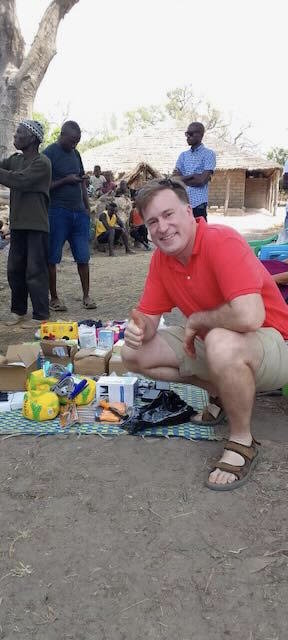
Tabanca Dana is a small but organized rural community where families farm, teach, raise children, and work collaboratively to solve local challenges. Like many villages in Guinea-Bissau, they face a fundamental obstacle: access to clean, reliable water.
Despite these challenges, the community demonstrated remarkable resilience and organizational capacity. The local teacher, youth leaders, and village elders were already collaborating to identify solutions. They had the social infrastructure and commitment—they simply lacked the financial and technical resources to implement sustainable improvements.
That initial needs assessment visit led to a multi-year relationship. Over several years, I've returned to Tabanca Dana multiple times, supported by friends, colleagues, and the PaRK Praça de Espanha community in Lisbon. Together, we've experimented with various development initiatives:
Each visit has been met with profound warmth and gratitude. The community has welcomed me as a partner in their development journey. Yet through all these initiatives, one truth has become increasingly clear: without reliable access to clean water, every other improvement remains constrained.
Water is foundational. It affects health outcomes, educational attendance, agricultural productivity, women's economic opportunities, and children's developmental trajectories. Addressing the water challenge isn't just one project among many—it's the enabling infrastructure for everything else.
Working through PEEP—Policy Experimentation & Evaluation Platform, we're now implementing a comprehensive water infrastructure project grounded in our core methodology: evidence-based policy experimentation with rigorous monitoring and evaluation.
PEEP is an accredited international NGO (ONG-D) with experience since 2010 in education, entrepreneurship, and community-led development across Lusophone Africa. We're officially recognized by the Portuguese Foreign Office (Camões I.P.) and work with governments, universities, and international institutions to transform innovative ideas into effective, scalable policies.
For technical implementation, we're partnering with TESE—Associação para o Desenvolvimento, a highly respected Portuguese NGO with proven expertise and active field operations in Guinea-Bissau. Their local knowledge, technical capacity, and established relationships ensure quality construction and sustainable maintenance protocols.
We're raising €5,000 for Phase 1: the construction of three new wells strategically positioned throughout Tabanca Dana to serve the entire community — Approximately 200 people, including children, women, men, and elders in the village.
This budget covers:
If we exceed our Phase 1 goal, Phase 2 will expand into complementary sanitation infrastructure—latrines and basic wastewater treatment systems—to maximize the health and environmental benefits of clean water access.
Construction is scheduled for April-May 2026, the optimal season when the water table drops sufficiently for safe excavation but before the intense dry season creates hardened soil conditions. This timeline provides adequate space for comprehensive fundraising, detailed technical planning with TESE, and coordination with community leadership on site selection and logistics.
This project embodies PEEP's core principle: "You can't manage what you don't measure." We're not implementing a generic template—we're applying years of community assessment, relationship building, and local knowledge to design an intervention specifically calibrated to Tabanca Dana's needs, capacities, and aspirations.
Our approach prioritizes:
Guinea-Bissau remains one of the world's most economically challenged countries, facing ongoing political instability and limited infrastructure development. Yet beyond the headlines and statistics, communities like Tabanca Dana demonstrate extraordinary resilience, social cohesion, and readiness to improve their circumstances when provided with appropriate support.
This project represents people-to-people solidarity translating abstract development principles into concrete action. It's about recognizing our shared humanity across geography and economic circumstance, and choosing to act on that recognition rather than remaining passive observers.
For me personally, this journey from GPS waypoint to multi-year commitment illustrates how development partnerships emerge from unexpected moments of connection—and how those connections, nurtured through consistent engagement and mutual respect, create pathways for meaningful change.
Dana Redford
Founder & President, PEEP
Senior Fellow, UC Berkeley Institute of European Studies
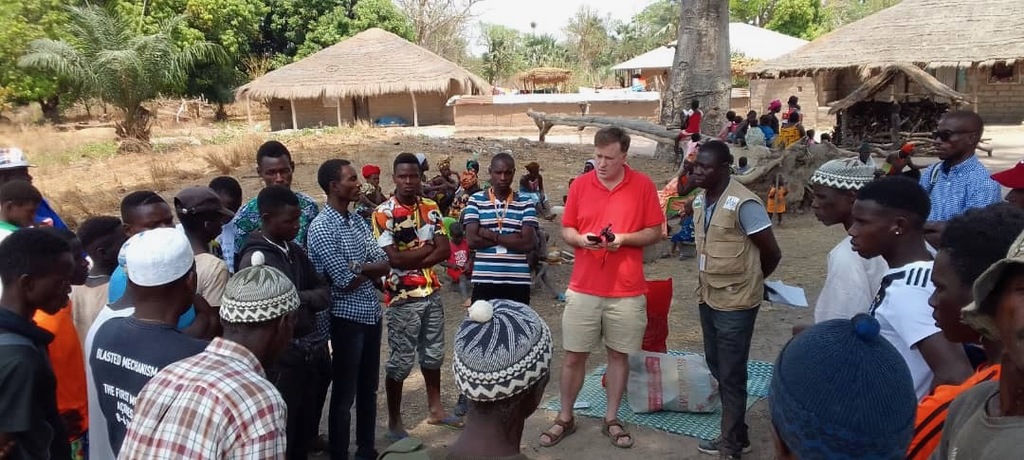
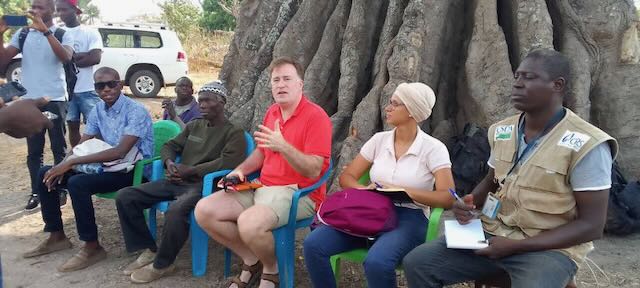
Community Engagement: Working directly with village leaders and residents to assess needs, plan interventions, and build local capacity for sustainable development.
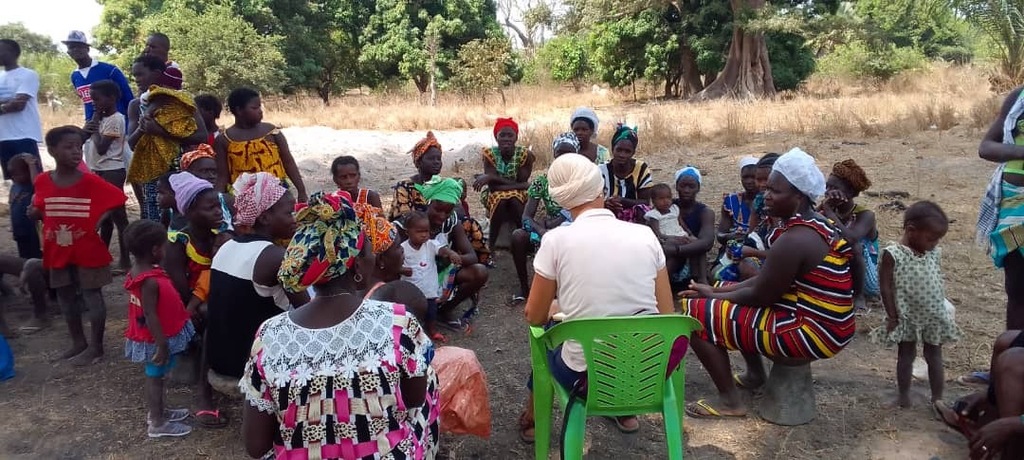
Inclusive Participation: Women and families actively involved in planning sessions, ensuring that water infrastructure serves the entire community's needs and priorities.
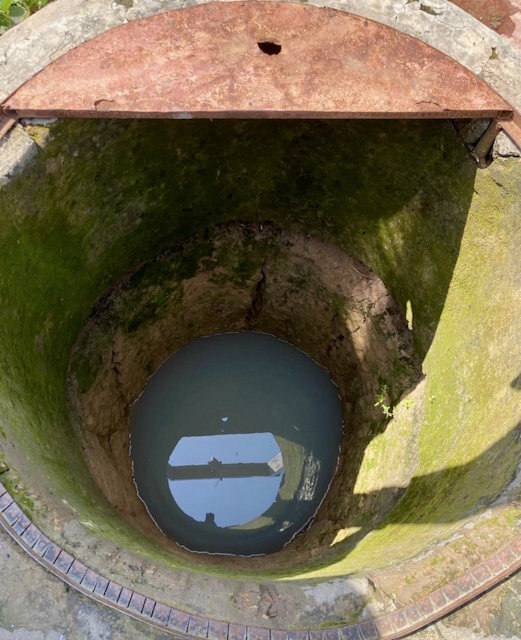
Current Infrastructure: Interior view of an existing well showing algae growth and contamination—water that's unsafe for consumption without extensive treatment.
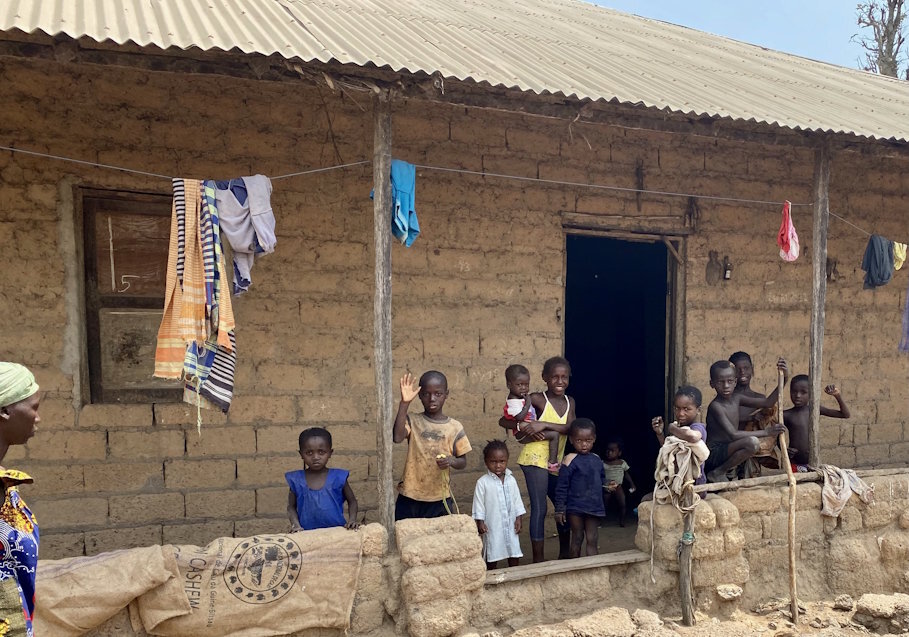
The Community: Children and families of Tabanca Dana—approximately 200 people who will directly benefit from reliable access to clean water.
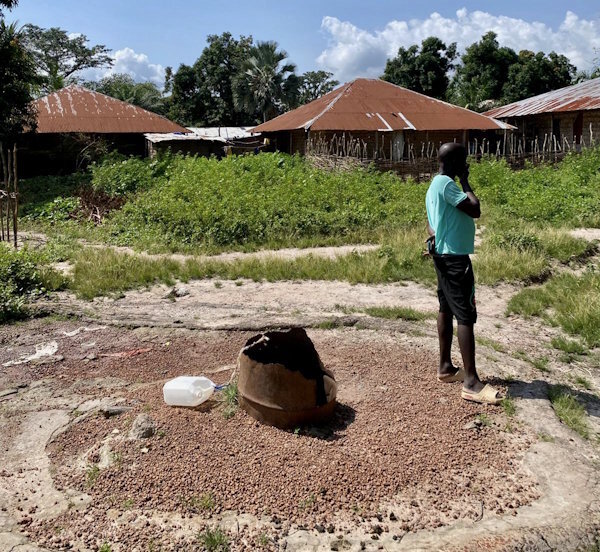
Existing Challenges: Current water access point with deteriorating infrastructure that fails during the critical dry season when water is most urgently needed.
Every contribution advances our mission of providing reliable clean water for Tabanca Dana. Here's how your investment translates into measurable impact:
Concrete rings, gravel, and sand required for one meter of well construction infrastructure.
Essential replacement parts for pump mechanisms ensuring long-term operational functionality.
Full pump mechanism with installation hardware and initial spare parts inventory.
One week of expert oversight by Guinea-Bissau water infrastructure specialist during construction phase.
All materials and labor for one fully functional community well serving multiple families.
Complete well construction plus comprehensive first-year monitoring and maintenance support.
Two complete wells plus community-wide water safety and maintenance training for sustained impact.
Your contribution funds rigorous, community-led development that prioritizes sustainability, local ownership, and measurable impact. Join us in bringing clean water to Tabanca Dana.
Questions about the project? Interested in partnership opportunities or institutional funding?
Contact us at info@peep.pt